LATEST BLOG
- Home
- /
- Learning Center
- radiatorxperts.
Repair or Replace? How to Tell What Your Radiator Needs
A car radiator is usually straightforward, but aluminum is its own thing. It takes real welding skill, and a sloppy weld on aluminum will fail again before long.
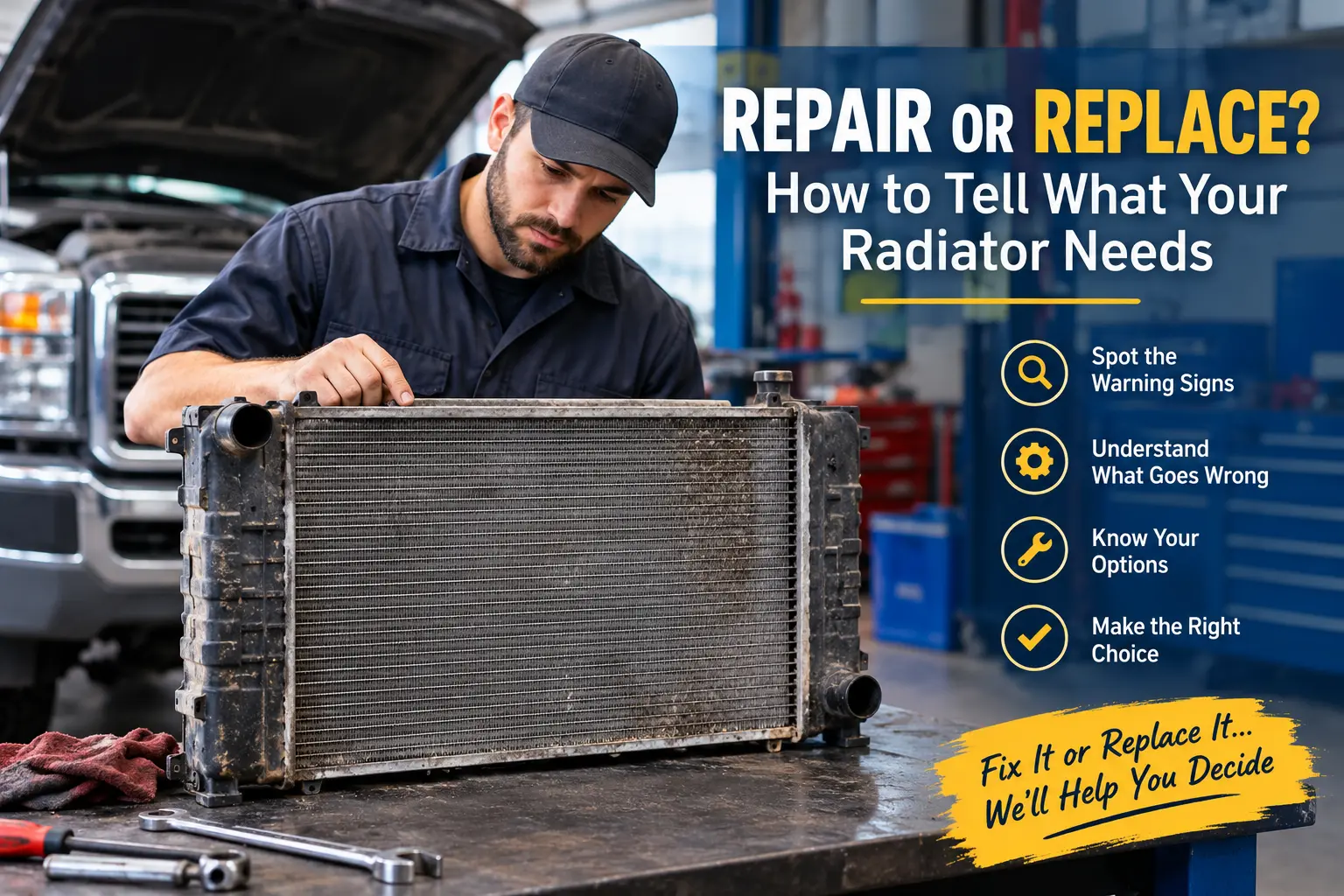
Then you start wondering if it’s a quick fix or an expensive one.
First, Look for the Warning Signs
A radiator usually complains before it quits. The engine runs hotter than it used to, especially when you’re towing or stuck in traffic. There’s a sweet smell under the hood.
Some signs are easy to miss. A heater that blows cold when the engine is warm. Bent fins on the front of the radiator. A crusty white or green residue around the seams.
Don’t wait on any of it. Running an engine hot is how a small repair turns into a big one.
What Actually Goes Wrong
Leaks are the most common. A pinhole, a cracked seam, a tank that’s pulling away from the core. Some of these are minor fixes.
Clogging is sneakier. The radiator looks fine from the outside, but inside, rust and scale have narrowed the tubes so much that coolant can’t flow properly. The engine overheats and people assume the radiator is dead. Sometimes it just needs a new core.
Then there’s corrosion, which is mostly the result of coolant that stayed in too long. Add road debris, a failing fan and a lot of hot summers, and that’s the typical radiator on our bench.
Repair, Rebuild, Recore, Replace
A repair fixes one problem. A leaking seam, say, or a cracked tank. It’s quick, and it’s the cheapest route when everything else is healthy.
A rebuild goes further. The radiator gets taken apart, cleaned, checked and put back together with the worn parts dealt with.
Recoring means a new core inside your existing radiator. The core is the part that actually gets rid of heat, so when it’s clogged or damaged, replacing it brings the whole radiator back. You keep your original tanks and mounts, which matters on trucks and equipment where a perfect fit is the whole point.
Replacement is for the radiator that has simply had it.
When Fixing It Makes Sense
If the leak is in one place and the rest of the radiator looks decent, fix it. If it’s an older unit that’s hard to find, fix it. If the only alternative is a cheap aftermarket part that won’t hold up as long as what you have, fix it.
When Replacing It Makes Sense
Sometimes the radiator is too far gone, and we’ll say so. Heavy corrosion, a collapsed core, several tanks and seams failing at once. Or the repair cost gets so close to a good replacement that spending it on the old unit doesn’t make sense. If it’s been fixed three times already and keeps coming back, that’s usually a sign too.
Farm and industrial equipment gets the worst of it. Dust, dirt, long hours, heavy loads. That’s why things like bolt-on, solder-on and feedlot cores exist. And if an engine feels weak or runs hot even though the radiator checks out, look at the charge air cooler and oil cooler too.
The Treasure Valley is rough on cooling systems. Long, hot summers, dusty roads, plenty of towing and farm work. Then winter comes and exposes old, weak coolant.
Why Not Ship It Somewhere Else?
What Happens When You Come In
We work on cars, trucks, commercial and industrial equipment for customers in Caldwell, Nampa, Canyon County and the rest of the Treasure Valley.
Quick Answers
Can a leaking radiator be fixed?
Usually, if the core and surrounding metal are still in good shape. It needs a look in person to be sure.
What’s the difference between recoring and replacing?
Recoring puts a new core in your existing radiator and keeps your tanks and fittings. Replacing means a brand-new radiator. Recoring is popular for trucks and equipment where the original fit matters.
Do you handle trucks and industrial radiators?
Yes. We work on automotive, truck, commercial and industrial cooling systems, including charge air coolers and oil coolers.
Where are you?
1716 East Ustick Road, Caldwell, Idaho 83605.
Not Sure? Just Bring It In
If you’re not sure whether your radiator can be saved, come by or give us a call. We’ll look at it and tell you straight.
Radiator Xperts
1716 East Ustick Road, Caldwell, ID 83605
(208) 454-5549