
LATEST BLOG
- Home
- /
- Learning Center
- radiatorxperts.
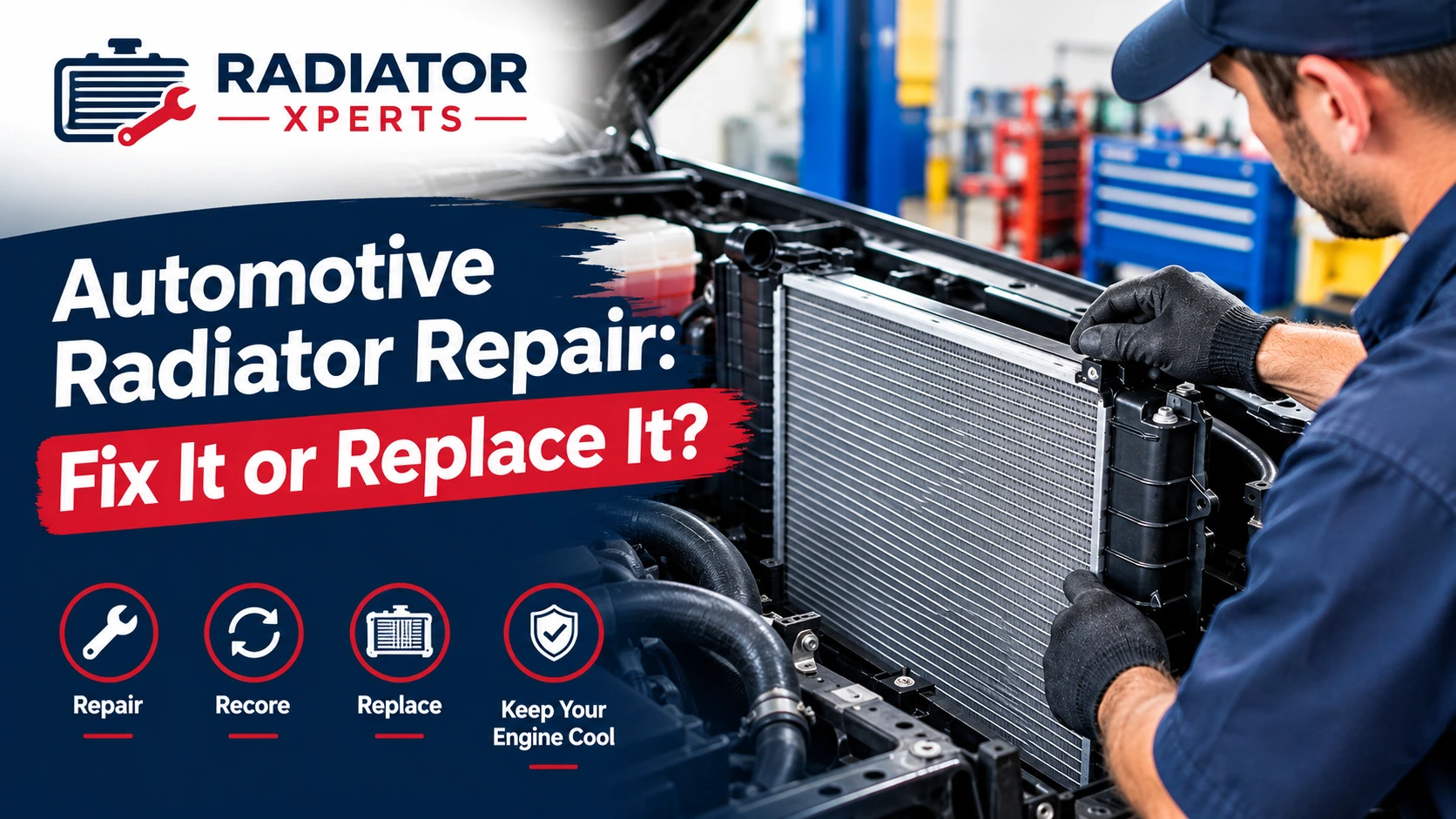
Automotive Radiator Repair: Fix It or Replace It?
Short answer: most of the time, a leaking or overheating car radiator can be repaired, and that usually beats buying a new one. The exception is a core that’s rotted through. We’ll get to that.
We’ve been fixing radiators out of our shop on East Ustick Road in Caldwell since 2002, so we’ve seen just about every way one can fail.
What it’s doing for your engine
When the radiator can’t do that, the engine cooks. A warped head or a blown head gasket costs way more than any radiator job, so don’t baby an overheating car.
What customers tell us first
Usually it starts with something small. A sweet smell after parking. A little puddle under the front bumper. A temp gauge that creeps up on the hill out of town but settles down on flat road.
Why radiators go bad
Mostly age. Old coolant turns acidic and eats the metal from the inside, and the tubes clog with rust and scale. After that it’s rocks and road debris poking holes in the core, plastic tanks cracking from years of heat, and seams or fittings that finally let go. Plain water instead of the right coolant mix does damage too. We see it more than you’d think.
So, can yours be fixed?
Small core leaks, leaking seams, broken inlets and outlets, and cores that are clogged but still sound are usually fixable. If the core is badly corroded or collapsed, you’re looking at a recore or a replacement. Cracked plastic tanks depend on the radiator and where the crack is, so we’d have to look at it.
A recore means we put a new core in your original tanks and fittings. That’s handy when the radiator is hard to find or has to fit just right. Replacement is for when the damage is too widespread to be worth fixing, and we’ll say so plainly. We’d rather save the one you have than sell you a cheap aftermarket unit that won’t last.
What happens when you bring it in
We look it over, pressure test it to find leaks you can’t see, and tell you what we found. Then we fix it, test it again, and it goes back in the car.
Copper-brass vs. aluminum
Older vehicles usually have copper-brass radiators, which are easier to solder. Newer ones tend to be aluminum with plastic tanks. Aluminum can be repaired, but it needs the right welding equipment and the know-how to go with it, and plenty of shops pass on it. We don’t. Details are on our aluminum radiator repair page.
Frequently Answers Quick
Is it worth repairing a car radiator?
Usually, yes. If the radiator core and tanks are in decent condition, repairing it can be more cost-effective than replacing the entire radiator.
Can I drive with a leaking radiator?
No. Driving with a leaking radiator can cause engine overheating and serious damage. If the temperature gauge rises, pull over safely, turn off the engine, and let it cool before seeking professional help.
What is a radiator recore?
A radiator recore involves replacing the core, including the tubes and fins, while keeping the original tanks and fittings when they are suitable for reuse.
Can aluminum radiators be repaired?
Yes, many aluminum radiators can be repaired. The best option depends on the type and extent of the damage, the radiator’s condition, and the repair method required.
Do you repair truck radiators and industrial equipment radiators?
Yes. Radiator Xperts provides radiator repair services for trucks and industrial equipment. Learn more about our truck radiator repair and industrial radiator repair services.
Where can I get radiator repair in Caldwell or Canyon County, Idaho?
Radiator Xperts provides radiator repair services at 1716 East Ustick Road, Caldwell, ID 83605. Call (208) 454-5549 for assistance with radiator leaks, overheating, repairs, or replacement options. We serve Caldwell, Nampa, Canyon County, and the surrounding Treasure Valley.
Not Sure? Just Bring It In
Call or stop by and tell us what the car’s doing. We serve Caldwell, Nampa, and the rest of the Treasure Valley.
Radiator Xperts
1716 East Ustick Road, Caldwell, ID 83605
(208) 454-5549